
The Government has put the introduction of the wealth tax on hold for now, while it finalises the necessary administrative and legal adjustments.
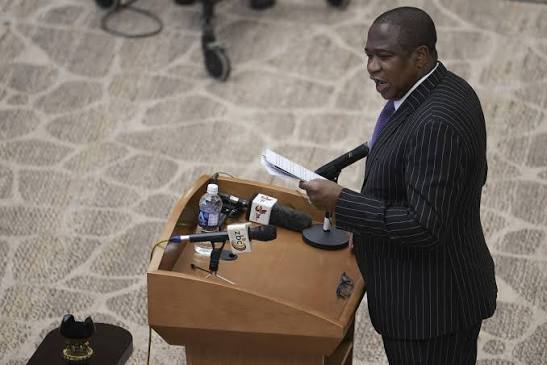
This was revealed by Finance, Economic Development and Investment Promotion Deputy Minister Kudakwashe Mnangagwa during a question-and-answer session in Parliament on Wednesday. Said Mnangagwa:
“Since the introduction of legislation requiring selected wealthy individuals to contribute to the fiscus through a wealth tax, our Government temporarily shelved the implementation thereof, pending conclusion of requisite administrative modalities informed by the concerns raised by some stakeholders.
“The additional administrative modalities and legislative amendments thereof will thus be tabled before Parliament for approval, paving way for implementation of the tax.
“Revenue collection will thus commence after the refinement of the implementation modalities.”
Emakhandeni-Luveve Member of Parliament Collins Bajila (CCC) asked Mnangagwa whether the Government would consider scrapping the measure altogether, given that it has not generated any revenue so far.
Mnangagwa, however, said repealing the law was unnecessary and would only delay the process further. He said:
“We have temporarily shelved it until the administrative modalities have been sorted out and figured out.
“The honourable member (Bajila) would have us repeal the legislation and then bring it back again before this august House.
“I would think that amendments would still need to come before this same House. It is a matter of process… but the intention is the same.”
Mnangagwa said the wealth tax would be implemented once consultations are complete and Parliament approves the necessary changes.
The wealth tax was introduced under the Finance Act No. 13 of 2023 and came into effect on 1 January 2024.
It is designed to ensure that high-net-worth individuals contribute more fairly to public finances, particularly in the face of widening inequality and limited resources.
The tax applies only to residential properties with a rateable value above US$250,000. It is set at 1% of the property’s value per year, capped at a maximum of US$50,000 annually. Commercial, industrial, and agricultural buildings are exempt.
Wealth taxes are used in several countries to reduce inequality and support public services, but they require strong institutions to administer and enforce them effectively.