
By Staff Reporter
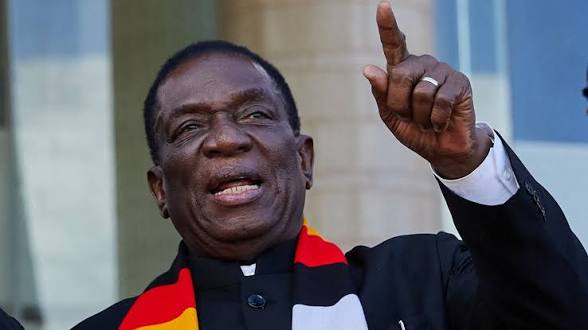
HARARE- A war veteran has mounted a fresh legal offensive against the Constitution of Zimbabwe Amendment Bill 3 (CAB3), putting President Emmerson Mnangagwa in a tight corner on whether he should sign the bill into law.
The bill was approved by Parliament on Tuesday and now awaits presidential assent.
An application, filed by liberation war fighter, Reuben Zulu, seek the High Court to immediately interdict Parliament from certifying, authenticating, validating or presenting the Bill to President Emmerson Mnangagwa for assent.
He said the legislative process was irredeemably tainted by alleged corruption and unlawful inducements to Members of Parliament.
The urgent challenge represents the latest chapter in a sustained campaign by the veterans to block CAB3.
In February this year, Zulu, leading a group of war veterans, unsuccessfully approached the Constitutional Court, arguing that Mnangagwa acted unlawfully by chairing the Cabinet meeting that approved the constitutional amendments despite allegedly standing to benefit from them.
The Constitutional Court struck the matter off the roll in May, ruling that the applicants had failed to identify sufficiently specific constitutional duties allegedly breached by the President.
Undeterred by that setback, the veterans have returned to court with a new strategy.
Zuku is back at the court targeting two Members of Parliament accused of receiving benefits connected to CAB3, together with the Clerk of Parliament, the Speaker of Parliament and Parliament itself.
He alleges that the National Assembly vote approving CAB3 was “contaminated” by legislators who allegedly accepted gifts, vehicles and cash while the constitutional amendment was still before Parliament.
Zulu argues that such votes cannot lawfully be counted towards the constitutional majority required to amend Zimbabwe’s supreme law.
“It is not about whether the reward was paid before or after a speech,” Zulu states in his founding affidavit.
“The question is whether a member accepted a reward for or in respect of the promotion of, support for, or conduct relating to a Bill.”
According to the application, Citizens Coalition for Change proportional representation MP Samantha Mureyani and Zanu PF Bindura South legislator Remigious Matangira allegedly received high-end Toyota vehicles from businessman Wicknell Chivhayo.
The duo also received cash while participating in parliamentary proceedings relating to CAB3.
The application further alleges that additional cash payments were distributed to legislators through parliamentary chief whips under the guise of constituency development funds.
Zulu contends that the alleged conduct breached the Privileges, Immunities and Powers of Parliament Act, the Criminal Law (Codification and Reform) Act, Parliament’s Standing Orders and the Members of Parliament Code of Conduct and Ethics.
He said legislators who allegedly received benefits connected to the Bill were under a legal obligation to disclose those interests and recuse themselves from participating in proceedings.
In his certificate of urgency, legal practitioner Kudzanai Brian Munakamwe argues that court intervention cannot wait because the constitutional amendment process is nearing completion.
“The prejudice is immediate,” he states.
“The constitutional process is continuing now. The risk is not remote. It is imminent.”
Munakamwe argues that unless the court intervenes, the alleged irregularities will become embedded in the constitutional amendment process.
“The same tainted votes, and the same tainted Members, are likely to be carried into the certification, authentication, transmittal and validation of the constitutional amendment process,” he argues.
Zulu maintains that the case is not driven by partisan politics, but by what he describes as a constitutional duty to protect Zimbabwe’s founding law.
“We are not opposition figures acting from partisan motives,” he states in his affidavit.
“This action is driven by constitutional alarm and at the foreboding harm occasioned” by the constitutional amendment process.
The provisional order sought would declare invalid any vote cast by a Member of Parliament who “received, accepted, was promised, or failed to disclose any gift, reward, payment, vehicle, remuneration, constituency-labelled funding or other benefit connected to support for CAB3.”
It further seeks a declaration that votes cast by the two MPs cited in the application are incapable of being counted towards the constitutional majority unless a lawful inquiry determines that the alleged benefits were unrelated to the Bill.
The applicants also want Parliament ordered to expunge all allegedly tainted votes from the CAB3 tally, institute an audit or parliamentary privileges inquiry into gifts, payments, vehicles and other alleged inducements connected to the constitutional amendment.
Parly should also exclude any members found to have benefited from participating in any future proceedings on the Bill until they have made full disclosure and been cleared through a lawful process.
As interim relief, Zulu is asking the court to temporarily bar the Clerk of Parliament and the Speaker from certifying, validating or transmitting CAB3 for presidential assent pending determination of the case.
They also seek to temporarily prohibit the two legislators named in the application from participating in any further parliamentary proceedings relating to the Bill and to direct Parliament.
Parliament should also ensure that no member who allegedly received or failed to disclose benefits connected to CAB3 participates in any debate or vote concerning the constitutional amendment while the matter is before the court.
The application comes at a critical stage in the legislative process. Having secured the constitutionally required parliamentary majority, CAB3 now awaits presidential assent before it can become law.
The respondents have been directed to file notices of opposition and opposing affidavits within three days.
If the High Court grants the interim relief sought, the constitutional amendment process could be frozen pending determination of the legality of Parliament’s vote, setting the stage for another major constitutional battle over the most consequential legislative reforms.