

By Staff Reporter
The Government of Zimbabwe and the United Nations system have taken a decisive step in shaping the country’s development trajectory for the next five years, following a fullday Strategic Prioritization Workshop that validated the 2027–2031 Zimbabwe UN Sustainable Development Cooperation Framework (ZUNSDCF) strategic priorities, outcome statements and indicative outputs.
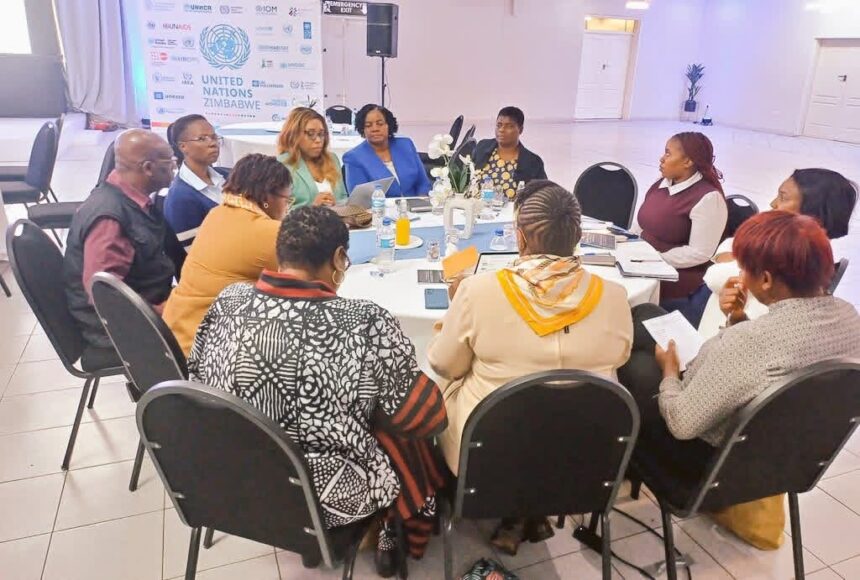
Held on 19 March at the Golden Conifer in Harare, the workshop brought together more than 130 delegates from across the national development ecosystem, culminating in broad-based agreement in five proposed strategic priorities and their associated outcomes and outputs.
Participants represented the Office of the President and Cabinet (OPC); Government Ministries, Departments and Agencies; UN agencies; development partners; the diplomatic corps accredited to Zimbabwe; youth and women’s groups; private sector organizations including the Zimbabwe National Chamber of Commerce (ZNCC) and the Confederation of Zimbabwe Industries (CZI); the Federation of Zimbabwe Trade Unions; organizations of persons with disabilities; civil society and non-governmental organizations; think tanks such as the Zimbabwe Economic Society, and media bodies such as the Zimbabwe National Editors Forum and the Zimbabwe Union of Journalists.
Co Chaired by the Chief Secretary to the President and Cabinet, Dr. Martin Rushwaya (represented by Deputy Chief Secretary Mr. Z. Churu), and the UN Resident and Humanitarian Coordinator, Mr. Edward Kallon, and jointly facilitated by Mrs. Miranda Tabifor, UNFPA Representative and Chair of the UN Programme Management Team, together with Mr. Anderson Chiraya, Chief Director in the Office of the President and Cabinet, the workshop concluded with delegates validating the proposed strategic priorities of the 2027–2031 UNSDCF, which were substantially enriched and sharpened through extensive group work and plenary discussions.
A Government–UN Compact for Transformation
In a keynote address setting the tone for the workshop, the Chief Secretary to the President and Cabinet, Dr. Martin Rushwaya, underscored Government’s expectation that the next Zimbabwe UN Cooperation Framework be firmly aligned with Zimbabwe’s development agenda—including Vision 2030 and the National Development Strategy 2—as well as international commitments such as the 2030 Agenda for Sustainable Development and the African Union’s Agenda 2063.
“The Cooperation Framework is not a parallel plan,” the Chief Secretary emphasized. “It is a vehicle to accelerate the implementation of our national priorities with the support, expertise and convening power of the United Nations and its partners. Today’s exercise was about ensuring that every strategic priority reflects our realities, our aspirations, and our commitment to leave no one behind.”
Reaffirming Government’s commitment to inclusivity, he highlighted the “wholeofgovernment, wholeofsociety” approach reflected in the diversity of stakeholders present. “We deliberately brought everyone to the table—Government, private sector, labour, youth, women, persons with disabilities, civil society, development partners and the media—because sustainable development is a shared responsibility,” the Chief Secretary noted. The validation of these five strategic priorities sends a strong signal that Zimbabwe is united around a coherent and ambitious development compact with the UN.
UN System Commits to Coherent, Integrated Support
The UN Resident and Humanitarian Coordinator Mr. Edward Kallon explained the 2027–2031 ZUNSDCF as the central instrument for the UN system’s collective support to Zimbabwe, emphasizing coherence, accountability and measurable impact.
Mr. Kallon underlined that the next Cooperation Framework provides an opportunity to drive a systemic shift across economic, social, governance, gender and environmental spheres. “We are being invited to do more than produce another planning document,” he noted. “We are being invited to imagine—and to help build—a fundamentally transformed system… a Zimbabwe which, by 2031 and beyond, has broken free from its structural challenges and is steadily consolidating reinforcing cycles of resilience, inclusion and shared prosperity.”
Mr. Kallon clarified the rationale for the 2027–2031 cycle, which extends one year beyond NDS 2, Vision 2030 and the SDGs. The extra year, he explained, is “a bridge, not a divergence” that will:
- ensure smooth transition into the post2030 national development strategy
- better align UN agency programming with national planning cycles, and
- avoid stopgap measures that slow implementation on the ground.
“This Cooperation Framework is the UN’s single, integrated response to Zimbabwe’s development agenda,” Mr. Kallon noted. “The five strategic priorities we validated today emerge from a rigorous analytical process, national consultations, and now, this intensive multi-stakeholder workshop. They respond to the country’s Human Development needs, economic transformation ambitions, governance and resilience priorities, and the imperative of inclusion.
Reflecting on the day’s outcomes, the UN Resident and Humanitarian Coordinator said, “What stands out is the level of ownership. The inputs we received—from senior government officials, think tanks, youth leaders, women’s groups, civil society, labour and the private sector—have significantly strengthened the proposed outcomes and outputs. The validated priorities now provide a robust foundation for a results-focused Cooperation Framework that we will design, launch and implement together, and for which we will be jointly accountable.”
Mr. Kallon also stressed that the Cooperation Framework is both a development and a prevention strategic tool, “By integrating humanitarian, development and peace nexus, the ZUNSDCF will help Zimbabwe manage risks through embedded crisis modifiers and anticipatory action plans, building resilience and protect hard-won gains, particularly for the most vulnerable.”
Five Strategic Priorities Under the Spotlight
Building on the Country Analysis, the evaluation of the current Cooperation Framework (2022–2026) and internal UN reflections, UNICEF Representative Ms. Etona Ekole led interactive discussions and presented five preliminary Strategic Priorities, draft outcome statements and outputs as a basis for working group and plenary reflection. While the technical formulations will be finalized in the coming weeks, the validated priorities broadly focus on:
- Inclusive Economic Growth, Structural Transformation, Decent Work and Financing for Development – Supporting macroeconomic stability, inclusive growth, expanded fiscal space, and green, digital and genderresponsive economic opportunities, with a focus on livelihoods, decent work and innovative financing.
- Inclusive Climate Resilience, Renewable Energy, Food Security and Sustainable Natural Resource Management – Ensuring that all people, especially those at risk of being left behind, are food and nutrition secure, climateresilient, benefit from renewable energy and sustainable ecosystems, and are better equipped to prevent and respond to disasters.
- Human Capital Development (Health and Nutrition, Education and Skilling) and Social Protection– Strengthening health, education, skills and social protection systems so they deliver equitable, quality, inclusive and shockresponsive services that build wellbeing and resilience across the life course.
- Inclusive Governance, Human Rights, Rule of Law and Social Cohesion – Enhancing effective, accountable, datadriven and devolved governance systems that uphold human rights, expand civic participation and foster social cohesion and peace.
- Gender Equality, Women’s Empowerment and Social Inclusion – Ensuring women, men, girls, boys and all those at risk of being left behind are free from violence, meaningfully engaged in development processes and enjoy equal rights and opportunities across economic, political and social spheres.
In breakout groups, participants examined whether each priority adequately reflected UN comparative advantage to support in addressing Zimbabwe’s development challenges and opportunities; captured cross-cutting issues such as gender equality, youth empowerment, disability inclusion and environmental sustainability; and was supported by clear, measurable outcomes and outputs.
By the end of the plenary session, there was consensus that the five strategic priorities were valid and relevant, with refinements recommended to better integrate private sector competitiveness, social protection, quality basic services (health, education, WASH), youth empowerment, and devolution approaches to development and resilience.
Private Sector Calls for Enabling Environment and Shared Value
The Principal Economist from ZNCC, Mr. Jephias Makiwa, welcomed the explicit recognition of the private sector as a key partner in delivering the Cooperation Framework.
“For Zimbabwe to achieve sustained and inclusive growth, the private sector must be at the heart of implementation,” Mr. Makiwa stressed. “The second strategic priority on sustainable and inclusive economic transformation is critical. We have emphasized the importance of an enabling policy and regulatory environment, improved access to finance for micro, small and medium enterprises, value addition and beneficiation, and support for value chains that create decent jobs, especially for young people and women.”
Mr. Makiwa called for a focus on catalytic priorities such as macroeconomic stability and financial sector deepening, industrialization and value chains, energy and logistics infrastructure, employment creation and skills alignment, and stronger governance.
Noting that the private sector stands ready to contribute meaningfully to this agenda,” Mr. Makiwa said, “what is required is a coordinated and deliberate approach that unlocks investment, enhances productivity, and builds confidence in the economy.”
Mr. Makiwa highlighted the role of the UNSDCF in mobilizing strategic investments and technical support, “We see this Framework as an opportunity to crowd in both domestic and international investment, to support industrialization, digitalization, and competitiveness. What has reassured the business community today is the recognition that economic transformation must go hand in hand with investment in social sector including social protection, climate resilience and skills development. That is how we create shared value and reduce poverty sustainably.”
Population Dynamics, Gender and Rights at the Centre
As Chair of the UN Programme Management Team (PMT), the UNFPA Representative Mrs. Miranda Tabifor underlined the centrality of population dynamics, sexual and reproductive health and rights, and gender equality within the Cooperation Framework.
“Demography matters for development,” the UNFPA Representative explained. “Zimbabwe’s youthful population is a tremendous asset, but only if we invest in their health, education and empowerment. Through this Cooperation Framework, the UN and Government are committing to prioritize quality services in sexual and reproductive health, prevent and respond to gender-based violence, and promote bodily autonomy and rights for all, including adolescents.”
Reflecting on the workshop discussions, Mrs. Tabifor added: “Across the five strategic priorities, we have worked to ensure that gender equality, youth empowerment and rights-based approaches are not treated as add-ons, but as integral elements. The feedback from women’s groups, youth representatives and organizations of persons with disabilities has been especially important in strengthening the outcomes and outputs related to inclusion and social protection.”
As PMT Chair, the UNFPA Representative also spoke to coordination, “The PMT will continue to facilitate and support the UN Country Team that the UN delivers as one, avoiding fragmentation and duplication. The validated priorities give us a clear, coherent framework within which to plan joint programmes, leverage comparative advantages, and track collective results.”
Industrialization, Value Addition and Green Growth
The workshop drew on the updated UN Country Analysis, presented on behalf of the UN Team of Policy Advisors by UNIDO Representative Mr. Innocent Madziva, outlined a picture of “progress amid systemic challenges.” The analysis proposes an optimistic path dubbed “The Green and Digital Leap” – a shift from business as usual to a new paradigm built on climatesmart agriculture and renewable energy, formalization and jobs; strengthened gender equality and inclusive governance; debt resolution and innovative financing, and enhanced human capital and social protection.
Mr. Madziva said, “The country analysis exercise allowed us to bring rigorous analysis into the political dialogue. Today’s validation confirms that the five strategic priorities are not only technically sound, but also nationally owned and politically supported.”
Children and Young People as Drivers of Transformation
The UNICEF Representative Ms. Etona Ekole underscored that the success of the 2027–2031 ZUNSDCF will also be measured by improvements in advancing neonatal care, the lives of children and young people. “Children and adolescents must be at the heart of this Cooperation Framework,” the UNICEF Representative stated. “That means ensuring every child has access to quality education, health, nutrition, water and sanitation, protection from violence, and opportunities to thrive in a rapidly changing world.”
Leading the group and plenary discussions, welcomed the meaningful engagement of youth delegates, “Young people spoke powerfully about employment, skills, digital inclusion and participation in decision-making. Their inputs have helped shape outcomes and outputs across the Framework, ensuring that youth perspectives inform not only social, but also economic and governance priorities.”
Inclusion, Partnerships and Accountability
Beyond sectoral themes, a recurring focus throughout the workshop was the imperative to “leave no one behind”—a core principle of the 2030 Agenda for Sustainable Development. Organizations of persons with disabilities, labour unions, women’s groups and civil society actors emphasized the need for explicit commitments to reach those furthest behind first.
Participants called for:
- Stronger, disaggregated data and evidence to identify and track inequalities.
- Deliberate measures to include marginalized communities in programme design and implementation.
- Labour rights and social protection for workers in both formal and informal sectors.
- Accessible infrastructure and services for persons with disabilities.
- Community-level engagement and localization of interventions.
The media’s presence—through editors, journalists and media associations—was also highlighted as a cornerstone of transparency and public accountability in implementing the Cooperation Framework.
From Validation to Finalization and Implementation
In closing the workshop, the co-chairs and co-facilitators of the workshop as well as rapporteurs of the five strategic priorities summarized the key refinements proposed by the thematic groups and plenary, including clarifications to outcome statements, strengthening cross-cutting commitments, and better articulation of indicators and partnerships.
The Permanent Secretary for National Monitoring, Evaluation and Learning at the Office of the President and Cabinet Ms. Madambi welcomed the consensus achieved and said, “Today we have collectively confirmed that these five strategic priorities and their proposed outcome statements and outputs will define the Cooperation Framework. We have enriched them with practical input from a diverse range of stakeholders. The next step is to translate this consensus into a finalized Cooperation Framework document that will guide our work with the UN from 2027 to 2031.”
UN Resident and Humanitarian Coordinator, Mr. Edward Kallon echoed this forward-looking focus and said, “The validation we achieved today is not the end of the process; it is the bridge for a series of engagement that will lead to the development of the Cooperation Framework document and its subsequent implementation.” He said that over the coming weeks and months, we will work closely with Government and partners to finalize the results framework, define clear indicators and baselines, targets and align resources through muti-year financing framework and working towards establishing local financing compact. “Implementation will require sustained political commitment, robust partnerships, and continuous dialogue with citizens,” underlined Mr. Kallon.
A Shared Roadmap for the Next Five Years
As delegates departed the workshop, there was a clear sense that the 2027–2031 Zimbabwe UN Sustainable Development Cooperation Framework is emerging as a shared roadmap—anchored in national priorities, informed by evidence, and strengthened by broad-based participation.
For Government, the UN, international development partners, the private sector, civil society, labour, youth, women and persons with disabilities, the validated strategic priorities now provide a common platform to tackle development challenges, seize new opportunities, and build a more inclusive, resilient and prosperous Zimbabwe.
Mr. Kallon issued three appeals:
- To Government – to continue to lead boldly with a clear, evidencebased and inclusive national development agenda under NDS 2 and beyond, providing the policy coherence necessary for effective alignment of partner support.
- To development partners and the private sector – to see the Zimbabwe UN Cooperation Framework “not just as a UN document, but as a shared platform for collaboration,” aligning financing, technical support and investments behind the agreed priorities.
- To the UN system – to embody UN 2.0 by being datadriven, digitally enabled, futuresmart and results oriented, working more jointly and embracing innovation, foresight and cocreation.
“We will not be able to do everything,” Mr. Kallon said, “but we can choose strategically prioritizing interventions that change the rules of the game, that build institutions and capacities, and that empower people as agents of transformation.”
The task ahead is ambitious, but the message from the workshop was clear that with coordinated effort and genuine partnership, the 2027–2031 Zimbabwe UN Cooperation Framework can be a powerful instrument to accelerate progress towards the national Vision to become upper middle-income society by 2030 and the Sustainable Development Goals—ensuring that no one is left behind.
Sirak Gebrehiwot is UN Partnerships and Development Finance Advisor at the UN Resident Coordinator’s Office in Zimbabwe.