

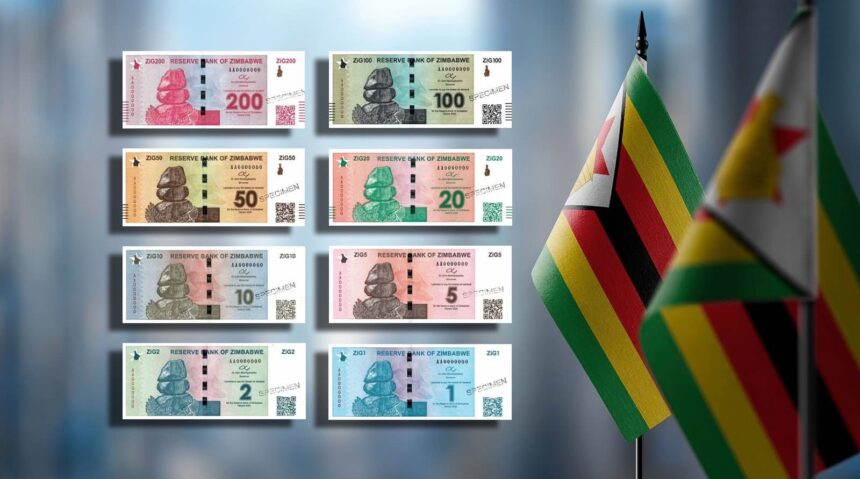
The Reserve Bank of Zimbabwe (RBZ) says it is working towards achieving a mono-currency system by 2030, anchored on the Zimbabwe Gold (ZiG) as the sole legal tender for domestic transactions.
Currently, Zimbabwe operates under a multi-currency regime in which ZiG coexists with foreign currencies.
However, by 2030, all local transactions are expected to be conducted exclusively in ZiG.
RBZ stressed that the transition is not a re-denomination exercise but a gradual process supported by policy interventions aimed at strengthening confidence in ZiG.
Individuals and businesses will continue to hold both ZiG and Foreign Currency Accounts, although foreign currency holders will need to convert into ZiG for local transactions.
Key milestones outlined by the central bank include strengthening foreign reserves to cover 3–6 months of imports, reducing inflation to 30% by December 2025 and eventually to single digits beyond 2026, and maintaining exchange rate stability with a parallel market premium below 30%.
“The journey which has already started will be supported by policy interventions that will ensure a gradual transition through widening the use of and demand for ZiG, long term stability of ZiG and availability of foreign curreny on the market.”
The central bank expressed optimism that with stability and confidence, individuals, businesses, and economic agents would progressively adopt ZiG, paving the way for the eventual mono-currency regime.
RBZ emphasised that banks would continue to honour legitimate foreign currency needs such as imports, travel, and medical expenses during the transition.
The central bank described the process as an “organic, market-driven approach” backed by policy reforms, designed to gradually usher Zimbabwe into a stable mono-currency economy.